Hebrew website: Hamas seeks release of five high-profile prisoners, including Marwan Barghouti
شبكة الخامسة للأنباء - غزة
The Hebrew site Ynet reported that, as part of U.S. President Donald Trump’s persistent efforts to reach an agreement to end the war in the Gaza Strip, a high-level Hamas delegation is expected to travel to Cairo for meetings with a negotiating team that includes representatives from Qatar, Egypt and the United States on a mechanism to release hostages. The talks will focus mainly on freeing living hostages, in addition to other Palestinian demands, including the withdrawal of the Israel Defense Forces from Gaza.
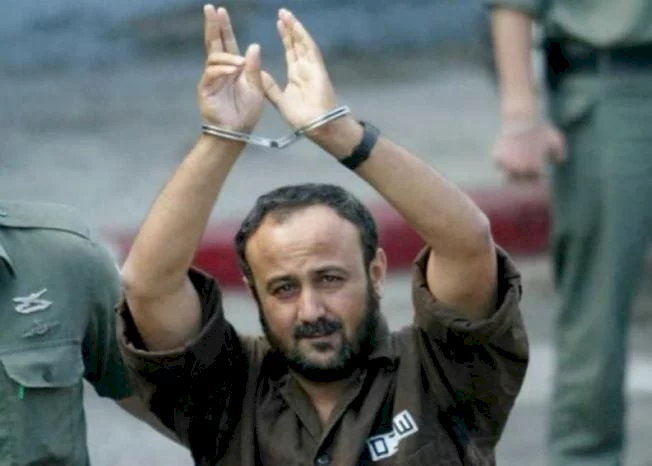
In a report prepared by Einat Halabi for Ynet, the site said that in exchange for the release of living and dead hostages, Hamas is demanding the release of 250 prisoners held in Israel, including Palestinian figure Marwan Barghouti, who has been jailed for more than 23 years and is ranked 60th on the list of veteran prisoners. A senior Palestinian official criticized what he described as the “insistence” on not releasing Barghouti in any deal.
The official told Ynet that “Barghouti represents a distinctive Palestinian formula unrelated to internal Israeli power struggles. I don’t understand the insistence on keeping him in prison, but Hamas is insisting on him this time. This is the last chance to free him.”
The Palestinian official added that “Ben-Gvir’s ridiculous visit to the prison and his photos with Barghouti were a clear attempt to exploit his image for election propaganda in Israel.” He said Barghouti is the only person capable of stabilizing Palestinian society and steering it toward governmental stability after Palestinian Authority President Mahmoud Abbas (Abu Mazen) lost popularity. He claimed that “the insistence of the right-wing parties on keeping him in prison reflects a real lack of planning in Israel, where all policies focus on the Palestinians instead of the lives of Israeli citizens.”

As part of preparations for the talks, Hamas has drawn up lists of prisoners proposed for release, while Israeli negotiating teams are busy mapping lines of escalation and withdrawal, which remain a point of contention between the sides. As reported, the meeting will initially concentrate on freeing all Israeli captives, while discussion of the names of Palestinian prisoners and the army’s withdrawal lines will be postponed to a later phase. Nonetheless, Hamas sources say the “details are relatively clear, and there is no intention to be drawn into prolonged negotiations. Israel will understand the technical issues.”

The dispute over the course of negotiations is expected to be tense, but both parties recognize that the release of all hostages would be a key starting point for further understandings. A Palestinian source familiar with the talks told the Hebrew site that “in the first phase there were some doubts about the release of 50 prisoners demanded by Hamas, which means they were not all part of the initial agreement.” In the final stage of the deal, according to the source, all the prisoners Hamas demands must be included on release lists, raising the question of whether Israel will agree. The source hinted that some names will be difficult for Israel to accept, but assessments will only be clear when negotiations reach the final stage.
The Palestinian Authority confirmed that the lists of prisoners include very few influential political figures, and most are expected to return home and cease involvement in politics. Among them is Ahmed Saadat, a leftist Marxist and opponent of the Palestinian Authority’s policies, who is already a prominent figure, although his influence is limited. Other politicians are not realistically competing for the future of the Palestinian Authority, and most are not genuine contenders for its leadership.
Israel currently holds 117 Palestinian prisoners aged 60 or older, 13 of whom are serving life sentences. Among the prisoners considered “powerful” within Palestinian society — in addition to Barghouti — is Ahmed Saadat, the secretary-general of the Popular Front for the Liberation of Palestine, who was behind the assassination of Minister Rehavam Zeevi in 2001. Saadat is regarded as a beloved and significant figure in Palestinian society, and Israel refused to include him in the Shalit exchange.
Also prominent among detainees is Abdallah al-Barghouthi, a leader of the movement’s military wing in the West Bank and a member of Hamas. Abdallah al-Barghouthi is currently serving 67 life sentences, an unprecedented term in Israel. He was not released in the Shalit deal.
Prisoner Ibrahim Hamed is described as the mastermind behind 90% of attacks during the second intifada, serving at the time as a commander of the Izz al-Din al-Qassam Brigades in the West Bank. In that role he planned and organized dozens of attacks against Israelis, including deadly suicide bombings, and has been wanted by Israeli security services since 1998.
Other notable detainees include Abbas al-Sayyid, second-in-command in the Park Hotel bombing in Netanya in 2002, who was sentenced to life 35 times for killing Israelis and was a Hamas leader in Tulkarm at the outbreak of the second intifada; and Hassan Salameh, a leader of Hamas’s military wing who received military training in Lebanon with Hezbollah and the Revolutionary Guards. After the assassination of Yahya Ayyash in 1996, Salameh led retaliatory attacks that killed dozens of Israelis. He was arrested in Hebron in May 1996, convicted of killing 46 Israelis and sentenced to 46 life terms.