Since the war began, 77 captives killed and dozens forcibly disappeared
شبكة الخامسة للأنباء - غزة

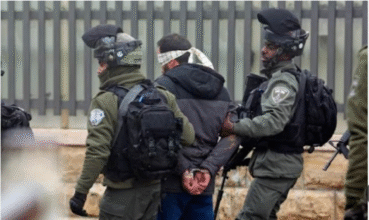
Prisoners’ organizations said on Tuesday that at least 77 Palestinian detainees have been killed, in addition to dozens of prisoners held in enforced disappearance since the start of what they described as the genocidal war on the Gaza Strip.
The organizations said the treatment of prisoners goes beyond grave violations and constitutes widespread war crimes and crimes against humanity, and they accused the Israeli judicial system, including the Supreme Court, of providing cover for further brutality against detainees.
They added that the continuation of these policies reflects a systematic escalation in violations of prisoners’ rights and places an urgent responsibility on the international community to intervene and stop these crimes.
The report reads as follows:

Two years after the start of the comprehensive and escalating war of extermination against our people in the Gaza Strip, and the wider assault across Palestinian geographies, prisoners’ institutions present a fact sheet on the situation of detainees after the extermination. The sheet includes data and figures that, the institutions say, reflect an extended extermination taking place inside Israeli prisons and detention centers. The concept of the extermination campaign has been expanded to include the Palestinian prisoners’ movement, which today faces the pinnacle of colonial-settler erasure. Amid an unprecedented escalation, prisons have shown another aspect of extermination through deliberate executions and killings of detainees. The number of confirmed prisoner victims whose identities have been announced since the start of the war stands at at least 77, while dozens more Gaza detainees reportedly died under enforced disappearance. This toll is a damning testimony to some of the most brutal periods in the history of our prisoners’ movement, which for decades resisted a prison system that has sought to destroy detainees physically and psychologically and to eliminate them by all means.


Based on hundreds of documented testimonies, physical evidence and extreme public threats issued by minister “Itamar Ben-Gvir” and the far-right Israeli occupation government, the prisoners’ institutions stress that what is happening to detainees exceeds grave violations and amounts to war crimes and crimes against humanity committed on a wide scale. They say the Israeli judicial system, including the Supreme Court, has provided cover for further brutalization of prisoners. These allegations include: crimes of torture, killing, looting, systematic starvation, deliberate actions causing the spread of diseases and epidemics, denial of medical care, and sexual assaults up to and including rape, in addition to a policy of collective isolation. These practices, aimed at the systematic destruction of Palestinian prisoners physically and psychologically, indicate an ongoing extermination carried out by the “State of Israeli occupation” within its detention facilities. The scale of criminality and brutality documented over two years has exceeded all legal descriptions and violated all international laws, norms and conventions, amid an unprecedented failure of the international system, particularly given the exceptional protection granted to these crimes by international powers led by the United States. Nevertheless, as rights organizations, and despite the grim picture, we cannot ignore the role of struggling human rights defenders or the importance of activating international decisions that support our people’s right to freedom and self-determination.
While the “occupying state” continues to commit its ongoing crime of extermination over two years, dozens of supporters of the “Resilience Fleet” remain detained, and in their testimonies they reported abuse, mistreatment and detention in harsh conditions. These arrests have been accompanied by public threats from the extremist minister Itamar Ben-Gvir, who has labeled the supporters ”terrorists”. The institutions salute all the supporters who attempted to break the imposed siege on our people in Gaza.
Key issues related to the reality of prisoners inside occupation jails since the extermination
Based on monitoring by the partner institutions (the Prisoners’ Affairs Authority, the Palestinian Prisoners’ Club, and the Al-Dameer Foundation for Prisoners’ Care and Human Rights), this fact sheet reviews the main data reflecting the meaning of extended extermination in prisons and camps. It includes figures on arrests recorded over the two years of war and updated figures on the numbers of detainees in Israeli jails.
Major policies and violations documented by the institutions since the start of the extermination
Human rights organizations have documented an unprecedented escalation in the scale and scope of systematic crimes and violations against Palestinian prisoners since the start of the extermination. The most prominent of these alleged crimes include:
· Torture in its various physical and psychological forms.
· Systematic starvation and denial of sufficient, balanced food.
· Medical crimes including denial of care and deliberate imposition of conditions that lead to the spread of diseases and epidemics.
· Collective isolation and policies of looting and deprivation affecting all aspects of prison life.
· Systematic repression carried out by special units of the prison administration, notably units known as “Keter, Metsada and Nahshon”.
· Violent physical assaults and the use of gas, stun grenades and electroshock weapons.
· Humiliation policies and strip searches, and sexual assaults including rape.
· The use of illness as a tool of torture, as in the case of the scabies outbreak.
· Psychological terror, solitary confinement, and threats of killing and execution.
· In addition, policies of arbitrary arrest have increased, with new pretexts for detention emerging, most notably administrative detention, which has become a critical turning point, arrests on charges of incitement, and the classification of most Gaza detainees as “unlawful combatants,” which opened the door to further grave violations against them.
· A policy of enforced disappearance against Gaza detainees
Prisoner victims represent the bloodiest period in the history of the prisoners’ movement
The number of prisoner victims whose deaths have been announced is 77, killed as a result of torture, starvation and denial of medical care; these are only those whose identities have been disclosed, while dozens of Gaza detainees who died remain under enforced disappearance.
Israeli authorities also hold the bodies of 85 detainees who died inside prisons, 74 of them since the start of the extermination campaign.
The total number of victims from the Palestinian prisoners’ movement since 1967 is estimated at 314, according to documentation compiled by human rights organizations over past decades up to the present.
We stress here that occupation claims of opening “investigations” into the circumstances of some detainees’ deaths, after some human rights groups filed formal requests, are mere stalling and misinformation.
The case of Gaza detainees
Accounts and testimonies of Gaza detainees have marked a turning point in understanding the level of brutality practiced by the occupation system, revealing an unprecedented pattern of systematic torture beginning at the moment of arrest, through interrogation, and into prolonged detention periods.
Methods of repression and violation ranged from physical and psychological torture, to abuse and starvation, deliberate medical crimes, and sexual assaults — together forming a full picture of an extermination policy inside prisons and camps.
These crimes led to the deaths of dozens of detainees, in addition to field executions carried out by occupation forces against others. Official data show that human rights groups have so far announced 46 victims among Gaza detainees out of 77 prisoners and detainees killed since the start of the extermination, while the occupation continues to hide dozens of Gaza detainee victims.
The occupation authorities have established several camps and special sections inside prisons to hold Gaza detainees, notably the Sdei Teyman camp, which has become a prominent site of torture and killings, and the underground “Rakefet” section in Ramla prison, which is cited as a stark example of enforced disappearance and systematic torture. The vast majority of Gaza detainees acknowledged by the prison administration are classified as “unlawful combatants,” one of the main legal categories that has entrenched torture crimes against Gaza detainees.
About 20,000 arrests in the West Bank including Jerusalem since the start of the extermination
This figure does not include arrests in Gaza, which are estimated in the thousands, nor arrests in the territories occupied in 1948
The number of arrests in the West Bank, including Jerusalem, since the start of the extermination is about 20,000, including roughly 1,600 children and about 595 women. These figures include those who were arrested and remain detained as well as those later released, marking a historic change in the number of people detained over just two years. This figure does not include arrests in Gaza, estimated in the thousands, or the figures for arrest campaigns in the territories occupied in 1948.
Accompanying the arrests in the West Bank were unprecedented crimes and violations, including severe beatings and abuse, organized terror against detainees and their families, widespread destruction of homes, seizure of vehicles, funds and gold, significant damage to infrastructure — particularly in the Tulkarm and Jenin camps and Jenin camp itself — demolition of homes belonging to families of prisoners, use of family members as hostages, use of detainees as human shields, execution-style killings, and the use of arrests and targeting of civilians as cover for settlement expansion in the West Bank.
The tally of arrest campaigns since the start of the extermination includes everyone arrested from homes, at military checkpoints, those forced to surrender under pressure, those held as hostages, and those subjected to field interrogations that involved long hours of detention.
Field interrogation operations have affected thousands since the start of the extermination, during which soldiers committed crimes comparable to those of torture in interrogation and detention centers.
Among the categories for which the institutions have tracked arrests
Journalists: The number of journalists detained since the war reached 202, most of whom were either placed under administrative detention or charged with what the occupation alleges is “incitement,” meaning arrests for exercising freedom of opinion and expression. Two journalists from Gaza remain under enforced disappearance: Nidal Al-Wahidi and Haitham Abdul Wahid.
Medical staff and personnel: According to the Ministry of Health, about 360 medical personnel have been detained, three of whom died inside occupation prisons as a result of torture: Iyad al-Rantisi, Adnan al-Barsh, and Ziad al-Dallo.
Update on numbers of detainees in occupation prisons and main categories
The largest proportion of detainees are held under administrative detention
The number of detainees in Israeli prisons has more than doubled, and the majority are held under administrative detention — i.e., without charge — which has been a major shift in the prisoners’ issue.
These figures are based on prisoners’ institutions and data announced by the prison administration through October 2025.
Data and statistics on detainee numbers in occupation prisons – October 2025
– The total number of prisoners and detainees in Israeli occupation prisons rose to more than 11,100, most of them administrative detainees and those in pretrial detention.
– The total number of prisoners and detainees in Israeli prisons as of early October 2025 exceeded 11,100, noting that this number does not include detainees held in military camps run by the occupation army. This is the highest number since the outbreak of the Second Intifada in 2000, according to documentation held by the relevant institutions.
– The number of sentenced prisoners, according to figures announced by the prison administration up to October, exceeded 1,460.
– The number of prisoners serving life sentences or facing indictments likely to result in life sentences is about 350, of whom 303 are serving life terms and 40 have indictments filed that could lead to life sentences,
– Prisoner Abdullah Barghouti holds the highest sentence of 67 life terms, followed by Ibrahim Hamid sentenced to 54 life terms.
– The number of long-serving detainees detained before the Oslo Accords is 17, including four who have been continuously detained since 1986: Ibrahim Abu Makh, Ibrahim Bayadsa, Ahmed Abu Jaber, Samir Abu Nema.
– The number of prisoners serving sentences between 10 and 20 years is 131.
– The number of prisoners serving sentences between 21 and 30 years is 166.
– The number of female detainees to date is 53, including three women from Gaza, and two girls.
– The number of child detainees to date exceeds 400, held in Ofer and Megiddo prisons.
– The number of detainees in pretrial detention, according to figures announced by the prison administration up to October, is about 3,380.
– The number of administrative detainees reached 3,544, the highest proportion compared with detainees in pretrial detention, sentenced prisoners and those classified as ”unlawful combatants”.
– The number of detainees classified as “unlawful combatants” is 2,673, noting that this figure does not include all Gaza detainees held in army camps and classified under this category. This classification also includes detainees who are Arabs from Lebanon and Syria.
Numbers of detainees before the war
– The total number of detainees before the extermination war exceeded 5,250 prisoners, including about 40 female prisoners and 180 children, while the number of administrative detainees was about 1,320.
– We note that since the start of the extermination the occupation authorities have denied families access to visit prisoners and have prevented the International Committee of the Red Cross from visiting detainees in prisons.
– We also note that Palestinian human rights organizations face major challenges and a systematic campaign of liquidation that has recently escalated unprecedentedly after the United States designated the Al-Dameer Foundation for Prisoners’ Care and Human Rights as a “terrorist” organization and imposed sanctions on three other organizations: Al-Haq, the Palestinian Centre for Human Rights, and Al-Mezan.
– All information relied upon by the institutions comes from legal teams that visit and monitor prisoners, testimonies and statements of released detainees, and daily monitoring and documentation.
– The institutions renew their call to the international system to shed its cloak of impotence and complicity regarding the extermination campaign, which has had no tangible effect on the ground, as the crimes committed have reached a level beyond words. What is happening is part of ethnic cleansing and erasure, and what is being practiced against prisoners and detainees is a direct extension of the extermination campaign. Continued international silence in the face of these crimes is an assault on all humanity, and the consequences of this war will affect anyone who has used impotence as an excuse to shirk their responsibilities.
For access to reports, papers and statements issued by the three institutions over two years of the war, the websites of the Prisoners’ Affairs Authority, the Palestinian Prisoners’ Club and the Al-Dameer Foundation for Prisoners’ Care and Human Rights are attached.