Reflections on the Current Palestinian Situation

الخامسة للأنباء - غزة
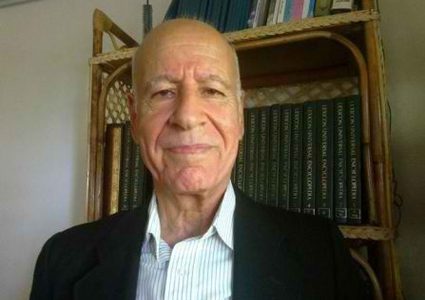
Author: Abdelmajid Swailem
Before October 7, 2023, Palestine was on the chopping block of the Americans, and Benjamin Netanyahu was sharpening his tools for a political slaughter, having moved into a phase of “decisive” confrontation, convinced that Palestinian “division,” Arab “normalization,” and the world’s preoccupation with the Russia-Ukraine war, including Europe’s distraction, were a historic opportunity that might never recur. He and the most extreme, racist members of his “fascist governing coalition” openly declared that Palestinians’ options were reduced to three: either submission, death, or expulsion and displacement. Netanyahu drew his infamous maps and paraded them about, explaining and boasting how Palestine had been erased with U.S. approval, Arab indifference, and European silence, save for rare exceptions.
Until that point, things were going as Netanyahu wished. The West Bank was to be the first field of decisive action, while Gaza had entered a phase of “bargaining” — its Hamas authority traded for quiet, and its political exclusion maintained by perpetuating separation from the West Bank, dealing a mortal blow to Palestinian national identity and enabling Netanyahu to quietly complete his historical project of liquidating Palestinian national rights and reducing them to mere subsistence needs — not only in the West Bank, but in Gaza as well, once its separation was cemented.
Until then, the fascist right felt confident in its vision and believed the facts on the ground more than supported — indeed validated — the precision of that vision.

At that point, Israeli reality had deceived or blinded itself with those “facts” driven by intertwined factors under one large heading: ideological haze. That haze, particularly in Israel’s unique circumstances, typically leads to the most lethal dangers for any political system — for states no matter how strong, for armies however superior, and for societies however cohesive.


I believe that Yahya Sinwar, who calmly prepared his plan and laid the necessary “Hamasian” groundwork for the “al-Aqsa Flood,” struck a massive strategic blow. He aimed to strip the occupying state of its balance, to shatter Israeli society’s fragile cohesion, and to undercut the occupation army, its intelligence services and security apparatuses — capacities that were expected to subdue Gaza after the West Bank battle was decided.
Returning now to Sinwar’s speeches that preceded and paved the way for this strike, we can understand his motivations. In short, he knew, in his own political calculus, that Hamas would face its fate at an upcoming political juncture: either play the game of power and bargain away its resistance to retain authority under Israeli terms that would inevitably be its end, or flip the script and overturn the table in a way that might end its rule or reduce its role — but at a price that would place the occupation state in a new historic quandary and confront its army and even its entire society with realities fundamentally different from the ones Netanyahu saw as ripe for crushing Palestinian national rights.
Sinwar’s plan achieved its aim: it placed the occupying state and the entire Zionist project before deadly threats in the face of the world and of peoples everywhere.
As a result, the occupying state has become synonymous with crime, extermination, and racism; it has become a pariah that has lost everything — the reputation of its army, the uniqueness of its claimed role as the region’s only “democracy,” its security (it has become one of the least secure states in the world), and an economy once seen as rising and exemplary in growth, in leadership of key sectors, in export capabilities, and in integration with major global tech and knowledge firms. It has also lost its investment reputation.
The occupying state has lost standing among Jews worldwide, and its distinguished human resources inflow has turned into record levels of reverse migration.
Moreover, the most important feature of Israel’s losses is that they are strategic and irrecoverable in the foreseeable future; they are, for the most part, irreversible and have become a trajectory of development rather than temporary trends prone to reversal.
In short, Israel’s losses are strategic political losses that may be irreparable for decades.
By contrast, Palestine has regained its centrality in the world and become the focus of global public concern, albeit at an enormous human cost — some aspects of which are catastrophic on a humanitarian level — balanced against Israel’s catastrophic political losses. It would be wrong, in my view, to fall into the trap of superficial equations that invert this picture while searching for “solutions” to the political myopia afflicting some circles in our national scene.
For this reason, reality can no longer tolerate many of the debates still circulating about the correctness of assessments, calculations, and predictions, because Israel’s losses are manifest and Palestine’s losses are also manifest — catastrophic political losses for Israel and catastrophic human losses for Palestine. Seeking other equations is political illusion, not political vision; it reflects latent wishes rather than objective considerations. These are private, ideational or political motivations or self-interests, no matter how much they hide behind the scale of the humanitarian disaster — and on the Israeli side they are almost an exact mirror of this reality.
It is a reality of fleeing and shirking the political catastrophe under illusions and lies that serve only to preserve a racist government that has nothing to do with “national” Israeli interests, but is driven by specific political interests and ideologies that are evident and need no further proof.
Yet the Palestinian humanitarian catastrophe, terrible as it is, can turn into a political catastrophe if our people and their active forces do not handle the complexities of the new phase that has resulted so far from the two-year genocidal war.
The defining battle of the new phase is the battle for national entity legitimacy and national identity, and the strategies of resilience that this requires. Here we must return to Netanyahu and to Trump to understand the nature of the struggle, the importance of its title, and its danger.
The Zionist-American plan aimed to destroy any Palestinian national entity in order to facilitate the liquidation of the Palestinian cause in the first instance, and to prevent that entity from playing an effective political role in confronting the plan, and to avert the danger that such an entity might be able to overturn the plan if it failed.
This explains the siege of the Palestinian National Authority. It explains the Israeli promotion of preventing a “Hamasstan” and a “Fathstan,” and it also explains the American brazenness in preventing President Mahmoud Abbas from attending the United Nations General Assembly. It explains the U.S. administrations — both Biden’s and Trump’s — alignment with the Israeli position.
Conversely, it does not harm the U.S. to sing praises to “Hamas” that are meant to lure it into the American “trap” of promised political solutions under the pressure of its circumstances; America knows there is no official legitimacy for Hamas yet, and therefore there is no fear of attempts to ensnare it.
The legitimacy of the Palestine Liberation Organization and the legitimacy of its national authority are therefore in grave danger — this is the first face of the risk that the humanitarian catastrophe could turn into a political catastrophe.
The second face is Hamas’s believing it can convert into any form of legitimacy except by becoming a new version of the Islamic Jihad’s military commander (a “Gulani” figure), thereby falling into the American trap.
Defending national legitimacy and national entity is defending rights and the cause, not defending individuals, factions, parties or organizations.
Fatah, Hamas, all national action factions, and all patriotic independents face a test of responsibility at a time when the future of the entire national movement is at stake. It is still possible to thwart the hostile plan with a minimum of unity.